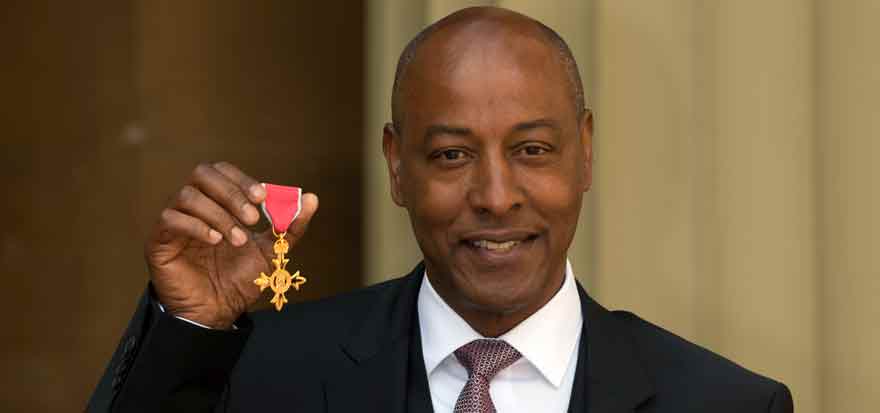
When the late Cyrille Regis became one of the first black players to be selected for full England honours, he was mailed a silver bullet and a note that read: ‘You’ll get one of these through your knees if you step out on Wembley turf.’
During the 1970s and 80s football was lying face down in the gutter.
Black players were targeted for the colour of their skin and on the terraces, hooliganism had become as much a part of the English game as bovver boots and Bovril.
However, Brendon Batson, the former Deputy Chief Executive of the Professional Footballers’ Association, was to emerge as a pioneer for black players.
His club, West Bromwich Albion, had become the first British football team to field three black footballers, Batson, Regis and Laurie Cunningham.
Crucially, Brendon played a significant role in the launch of Kick it Out, a campaign tackling racism and discrimination in football.
Supported by the Professional Footballers’ Association, this season marks 25 years since the launch of football’s anti-racist charity.
This is Brendon’s story.
Nothing prepares you for a new life in a completely different country and a strange culture.
I was born in Grenada, a beautiful Caribbean island.
I was just nine when my mother decided to send her two sons to live with their uncle and aunt in England.
My aunt was a midwife, and we were the only black family in Tilbury, so we never had to introduce ourselves to anyone.
My mum had told us that coming to England would be an adventure, but it felt a faraway place from the cosmopolitan life I’d left behind.
I’d never experienced racism, but suddenly I was being called all the names under the sun at school.
I didn’t really understand what the words meant, when they laughed and said those cruel, hurtful things.
I was a child.
However, later on I did.
I took some beatings, but I had to defend myself.
I learned to fight and carried on fighting until I was well into my teens.
England was a different place then and unrecognisable from the multi-cultural country we inhabit today.
Just imagine playing park football on a Sunday afternoon and people you had never seen before would deliberately stand on the touchline and shout racist abuse, like they often did from cars, buses and on the London Underground.
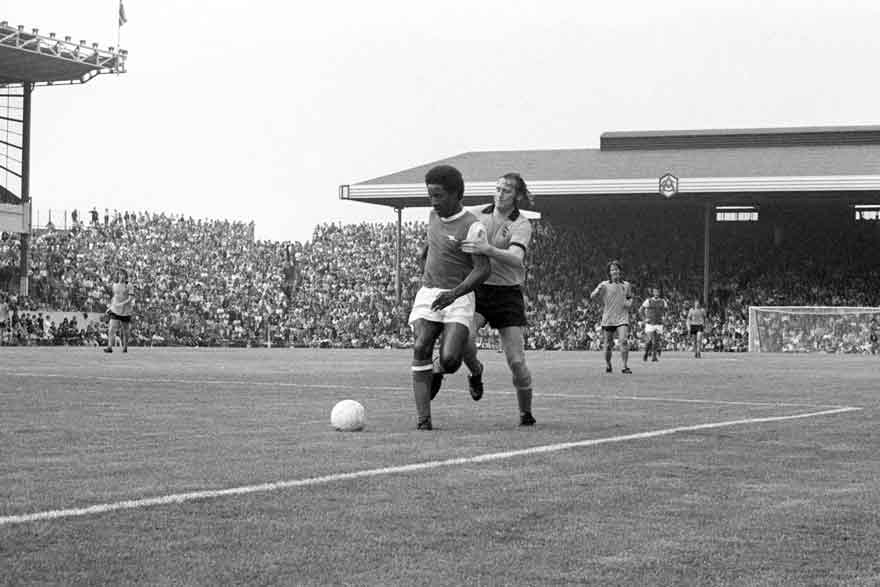
In 1966, the year that England won the World Cup, I signed schoolboy forms with Arsenal.
Can you imagine that at 14?
The manager was Bertie Mee, who guided the Gunners to a famous league and cup double in 1970-71, and one of the most astute men I’ve ever met.
Bertie was in the Royal Medical Corps where he also trained as a physiotherapist.
Bertie set about re-organising Arsenal as if he were engaged in a military exercise.
One evening he took us all to an incredible restaurant in London, serving sumptuous food.
His philosophy was that some of us were hopefully going to go on to have successful careers, so we needed to know how to behave in such an environment.
He had a motto: ‘Remember where you are, who you are and what you represent.”
I never forgot those words and I became the first black player to play for Arsenal.
Then I moved to Cambridge United.
Within a few months, I’d gone from the top of the game to the bottom, but it was to be the making of me, working with Ron Atkinson.
But nothing had changed off the pitch.
In the compact grounds of the Fourth Division you could hear every word, people shouting foul racist stuff, and the monkey noises too.
But I never took a step backwards.
It did not intimidate me, and my mum would say: ‘Brendon, meet it head on.’
It wasn’t always easy to do that, though.
During a game at Bradford City, a supporter began screaming racist abuse and when I went over to take a throw in, he charged down the terrace and shouted the N word in my face.
I was distraught - I wanted to jump in the crowd and confront this guy, but the assistant manager John Docherty stopped me.
It was ironic that it took a white Frenchman (Eric Cantona) to confront his tormentors many years later.
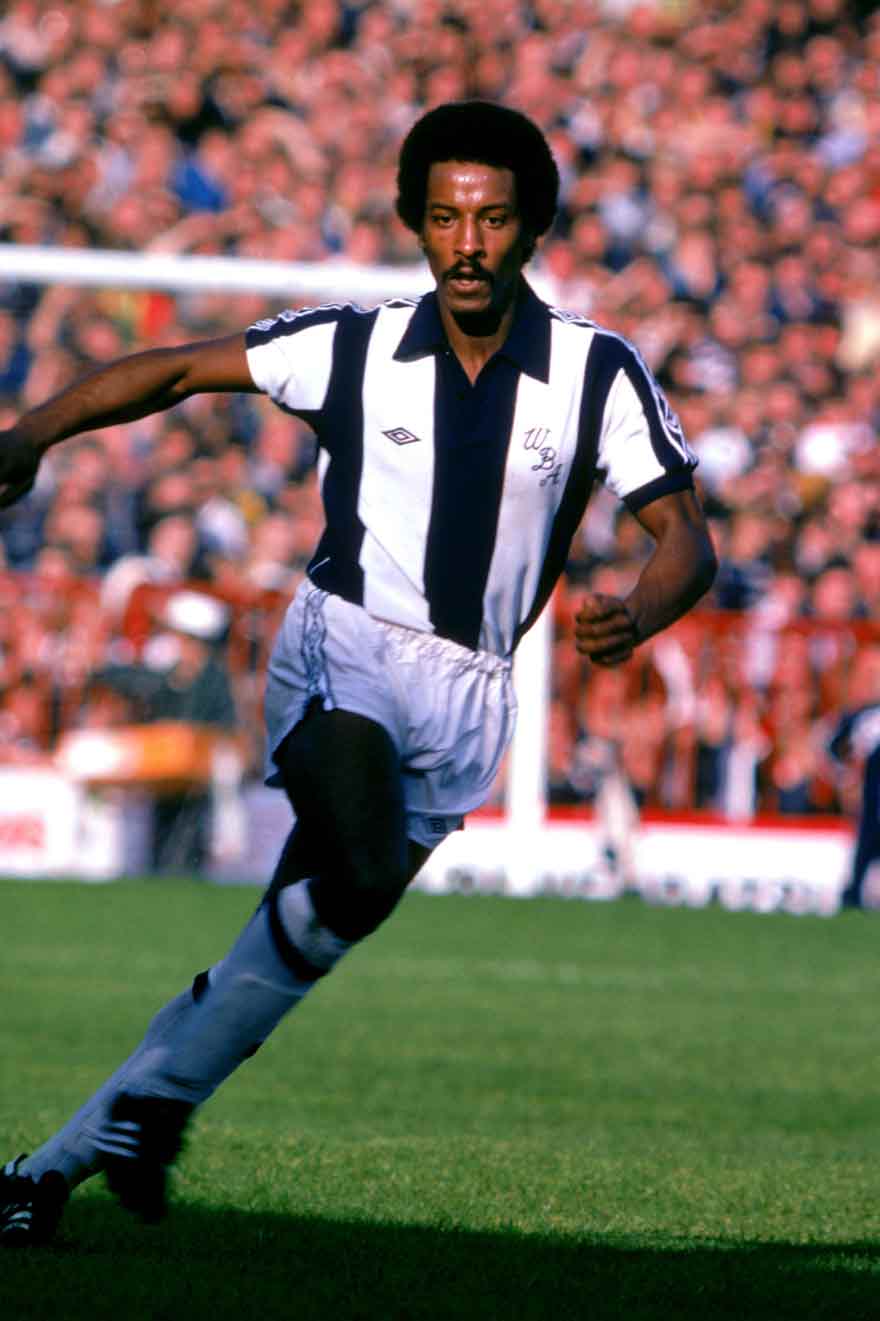
When I moved to West Bromwich Albion, to work under Ron Atkinson again, the racist abuse just got louder at the grounds we visited.
WBA played against West Ham United at Upton Park and somebody threw a bunch of bananas at Cyrille Regis.
It was impossible not to feel hurt and fearful because Cyrille was a very kind person, somebody who would do anything to help people.
Racist slogans were slapped across signs, posters and stickers on the streets and daubed on walls outside the stadiums.
It needed a campaign to highlight the abuse that black players got – yet the authorities did nothing.
It is great credit to the players of my era that despite all the abuse that they endured they stayed strong.
Much later when I worked for the PFA I had an opportunity to help address the scourge of racism in football
In 1993, a young lady called Louise Ansari came to see me in Manchester with an idea that had come from Herman Ouseley, who, at the time, was the Chief Executive at the Commission for Racial Equality.
As she explained the idea of using the power of football to help address the issues of racism in society, it was like a giant lightbulb switching on.
I went to my boss, Gordon Taylor, and said it was something we needed to do.
Gordon embraced it straightaway, but it was also clear that rather than just being a one-off campaign, it needed longevity if it was going to work.
Perhaps the surprise is that it didn’t start earlier.
I always thought that with more black players coming into the game, it would improve matters, but the abuse got worse and we accepted it.
Our attitude was that we’d keep playing, keep coming back for more and it would go away.
We didn’t want to make it a purely black issue, and that was an important decision because it helped legitimise it and Ian Wright, Gary Mabbutt, Paul Elliott, Pat Nevin and Garth Crooks all played a crucial role.
The official launch of Kick It Out (then Let’s Kick Racism Out of Football) came a year later with what I still think is a great slogan: ‘It’s only the colour of the shirt that counts.’
Clubs all over the land embraced it and four years later it became an independent organisation supported by the football authorities with the name changed to Kick It Out.
Crucially, the law changed, meaning that any racist abuse or behaviour was a criminal offence and it brought, I think, an awareness beyond football.
It was also a landmark moment for Kick It Out because it gave decent fans a voice.
Not only did it change the face of football and improve the atmosphere in football grounds, it emboldened the respectable majority to stand up against the racists.
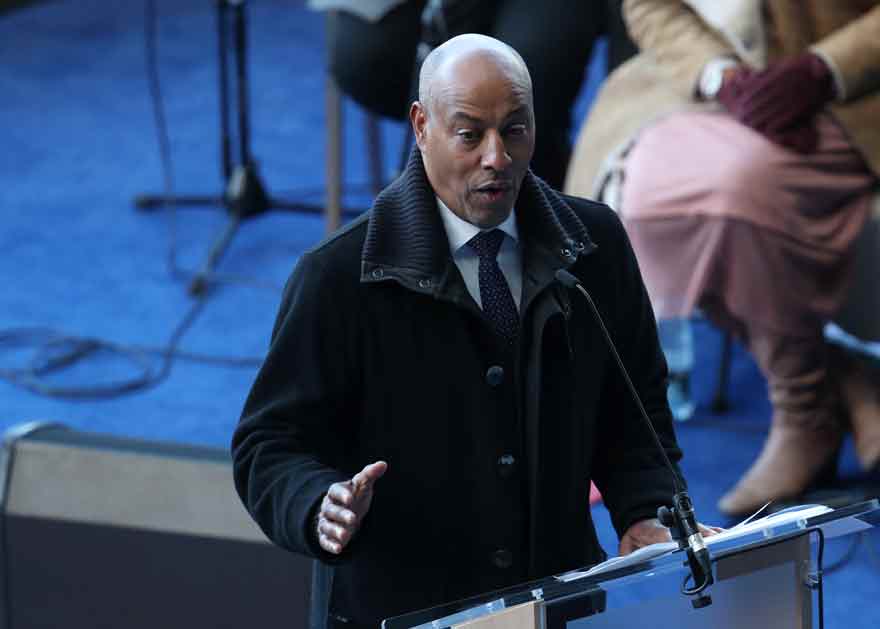
Football today is such a melting pot of nationalities, ethnicities, religions and that they are welcomed by our game is so encouraging.
Players are prepared to speak out about abuse when they are targeted.
They are willing to make a stand and racism on the field is being increasingly tackled by the protocols that are in place.
That too is a big step in the right direction.
Perhaps now, it is the game’s authorities that need to catch up and take proper action against clubs or national federations when supporters behave in a racist manner, rather than handing out fines that are effectively a pittance.
Like any organisation that has lasted for 25 years, Kick It Out has had to be flexible, it has had to change over time, but has never lost sight of its core values or the job that it is there to do.
When you roll back the clock to the dark days of the 1970s and 80s, it is easy to become complacent and think that the battles have been won.
We know that’s not the case and that there is still work to do.
Kick It Out is as relevant today as it was a quarter of a century ago - but we still have to vigilant.
Next week: ‘Brendon Batson: How I forgave Big Ron.’
Brendon Batson was talking to Tony Dewhurst.


.jpg)