Bob Hazell talks to Tony Dewhurst about the scourge of racism and how the Professional Footballers’ Association helped him when injury forced Hazell to retire before he was 30.
IT’S late morning as Bob Hazell pulls up outside a Midlands hotel, close to Wolverhampton Wanderers, his first club and one he served with great distinction.
Today the rain is bouncing off the street and Bob eases himself out of the car, walks slowly across the pavement and gingerly negotiates the steep steps to the entrance.
It’s a painful sight, but this gentle giant of a man makes little of it.
After all, he’s made it, something of an achievement when all there is between you and a rapid acquaintance with the ground are some ageing metal plates in his back bone and a plastic hip holding him together.
But back in the 1970s, when he was feted on the North Bank terrace at Molineux, he thought only of playing.
If it meant another pain-killing injection, then that was the price of playing the game he loved.
Only now is he able to understand the real cost as he approaches his 60th birthday, contemplating an uncertain future.
His hospital X-Rays paint a gruesome picture of the agony he must suffer most days.
“I’m not in great shape and the doctors have told me that I could end up in a wheelchair,” he said.
“I’ve had four lots of surgery and the PFA helped me out with some of the cost, so I’ll always be grateful to them.
“I try not to think about it too much, but it has taken a heavy toll.
“Last year I was incredibly low.
“I did think about suicide.
“But it was the deep love of my family which kept me going and I’m in a good place now.
“My beautiful wife, children and grandchildren – they are my life.”
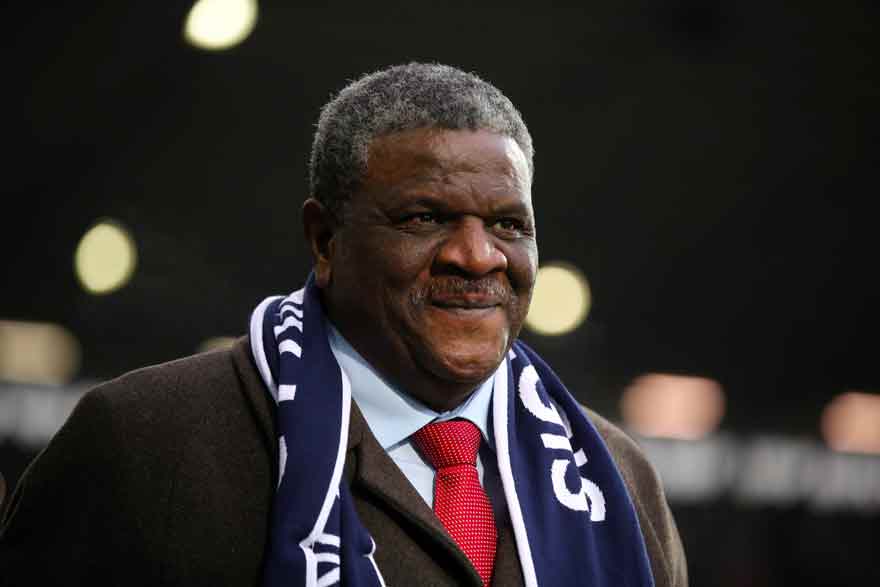
Bob Hazell was hailed as a trailblazer four decades ago.
He was the first black professional footballer to represent England at any level, and when we talk he tries hard to hold back the tears.
And his mood dims briefly when he recollects the bundles of hate mail that would arrive at Wolverhampton Wanderers addressed to him.
“The letters came from everywhere, all over England, and it was really horrible stuff,” he said.
“Go home n*****
“Get out of our country.
“My wife, bless her, kept a lot of them, and many that I never saw.
“It makes me sad that somebody could target that level of hate towards a man because of the colour of his skin.”
And as a pioneering black footballer, he has a perspective like no other.
“There was this one fella at West Ham, he had the voice of a town crier,” recalled Bob.
“It was as if he drew it from the bottom of his boots.
“He was screaming n*****
“No words could describe that raw hate and venom.”
Yet Bob’s enthusiasm for the game which has almost crippled him is undiminished.
“I’d do it all again in a heartbeat.
“I had a very blessed life.
“I do get emotional speaking about those days and I loved playing football.
“It was the best thing that ever happened to me.”
There’s no rage, though, just a deep sorrow from a compassionate, affable man that society could be so cruel and unforgiving in an era when racism was an acceptable part of daily life for a few.
He adds: “One day, I got called out of training at Molineux, and a coach told me that I had to get my stuff.
“I was 17 and thought I was getting kicked out of the club.
“I got back to my digs in Wolverhampton and my landlady, who was a lovely person, said I would have to go because I played my music too loud.
“I knew it was nonsense and when I had packed my suitcase she admitted that her neighbours were not speaking to her because she had a black boy staying.”
At Leicester City, who he served admirably for three years, fans would chant racist abuse at opposition players, and then sing: ‘There’s only one Bob Hazell.’
“I just couldn’t make sense of it, the contradictions of it all,” he said.
“But if you let it get to you, then you’d just be a soft centre, somebody without character.
“I wanted to make a stand, but nobody would listen.
“Instead I was told to say stupid things about the abuse, like it did not worry me in the slightest.
“My friends didn’t even come to watch me because football grounds weren’t welcoming places for black people.
“And the clubs just did not want to talk about it.
“Those in charge of football then, the real power brokers, they didn’t care one jot.”
He says the Professional Footballers’ Association, the driving force of Brendon Batson and Gordon Taylor, and the Kick It Out anti-racism programme, finally provided the catalyst for change and to defeat the racists.
“Without them nothing would have happened,” he said.
“No other organisations in football have done as much for football in the battle against racism.
“Look at how Gordon has led the PFA with strength and fortitude, from the seventies and eighties when nobody wanted to know about football.
“Gordon has guided the union over those hurdles to where they are today - and I think that’s an incredible achievement.
“He is a good and honourable man who continues to help thousands of his members and is always there to listen and do his best.”
At Wolves Bob played alongside George Berry, the Professional Footballers’ Association senior commercial executive.
Later on, at Queens Park Rangers, where he prospered under former England coach Terry Venables, he reached the 1982 FA Cup final.
A Glenn Hoddle penalty gave Tottenham Hotspur a slender victory in a replay.
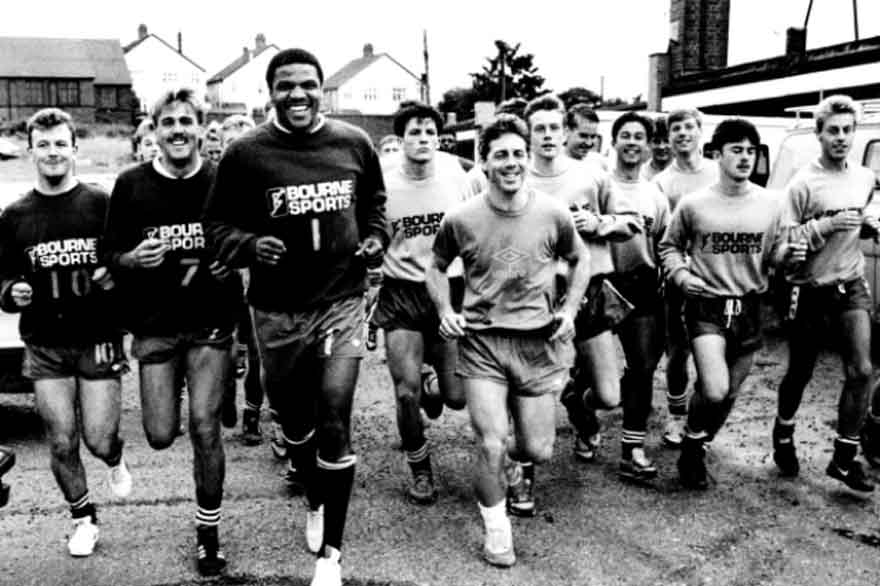
Bob Hazell at Port Vale
And at Port Vale, where injury forced him to retire at the tender age of 29, there was to be a measure of revenge over Spurs as he helped the Potteries club snatch a memorable FA Cup win.
“Wherever you go in football, and I’m sure it is the same today to a certain extent, it can be a very hard school of knocks.
“Then, whether it was colour, how you dressed or talked, you just had to find ways of dealing with it.
“If you can’t take it, there’s the door and that’s what it was like.
“It could be a very brutal environment and people would deal with it in different ways.
“But I have never been scarred by the racists – I’ve always believed in the goodness of football.”
Fresh out of school, Bob remembers a late call up for the Wolves reserve side and a second team fixture against Derby County.
“I was 16, and I didn’t know what I was doing,” he said.
“It was my second game and Kevin Hector, who won the title under Brian Clough and Dave Mackay at Derby, was my opponent.
“I was making mistakes, but Kevin was encouraging me, giving me advice during the match and at the final whistle he talked to me about how I could improve my own game.
“Remember, this was an opposition player and he was very humble and kind to a kid who he had never clapped eyes on before.
“I’ve never seen Kevin since, but that changed my perception of football and life - and that goodness could overcome the blind ignorance of racism.”


.jpg)