From your archetypal 1970s maverick playmaker to inspiring a generation of new fans as Sheffield United’s community talisman.
“It may be an exaggeration to say that it saved my life but there’s no doubt it was
a life saver,” says Tony Currie. And if the distinction between those two statements is slight, it isn’t hard to appreciate exactly what this player who could make the ball speak is getting at.
The discussion is about the PFA’s Football in the Community scheme and how much it has meant to so many players across the three decades it has spread goodwill and appreciation across so many parts of the country. “I’ll tell you one thing it did,” Currie says. “It allowed me to learn how to become a book-keeper and I never thought that would happen.”
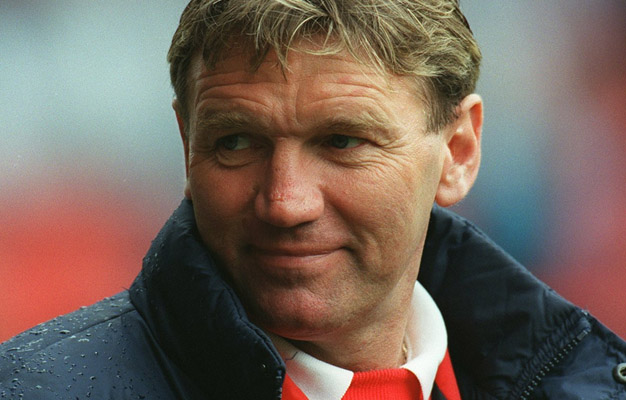
In his 67th year, the former Sheffield United, Leeds United, QPR and England midfielder, reflects with special pride on his time in the role at Bramall Lane, where mention of his name still produces a warm glow of appreciation. Currie has his name over a room at the South Yorkshire ground he graced many times in his 313 appearances over eight years, bridging the 1970s and 80s – and that is a testament to the impact he had on an area a long way from his Edgware roots.
In 1986, as a mark of respect, Currie was granted a testimonial by Sheffield United, spent the next six months ‘messing about’ and was then asked if he would consider something rather radical. He readily applied for the post as the club’s community officer and in 1988 a new adventure began for him. He was not to know it would be almost as fulfilling as the one that had initially driven him to become one of the country’s most recognisable talents. The shoulder-length blond hair and magnificent side-burns may have long gone – as have too many of his playing partners from those halcyon days – but he reminisces about community service with a quiet satisfaction.
Think of Tony Currie, and the mind conjures magical moments with the ball doing his bidding – not least drawing from BBC commentator John Motson the famous “a quality goal by a quality player” epithet when he bamboozled the West Ham defence in March 1975 at Bramall Lane. The finish is unmistakeable Currie (West Ham goalkeeper Mervyn Day’s face is an absolute picture as the ball rolls into the bottom corner) though the shrewd sliding interception that helped set it up during the initial period of play perhaps less so.
A NEW START
There always was more to Tony Currie than met the eye and so it proved when he was thrust into the deep end and became the talisman for Sheffield United’s initial foray into the community programme, when no-one quite knew where to go and what to do.
“I wasn’t qualified to do anything,” he says. “I’d been out of the game for five years, I didn’t have any coaching badges, I was just feeling very sorry for myself, living at home with my mum, I was absolutely lost and in a pretty bad way at 33 years of age. This really did put me back on my feet.
“I was told I’d be in charge of a team of people in the community programme, most of whom were on the dole and we’d bring them together. We were all getting paid £105 a week by the PFA as I remember it – which was £105 more than I was getting at the time. There was quite a regular turnover of staff at the outset but we made a lot of positive progress. Then, after four years, we were on our own and had to raise our own funds through soccer schools, sports clubs and the like. That’s when the bookkeeping came in handy. I was completely self-taught. I was appraised on the quality of my paperwork and how well I did as a team leader. I had to file reports on everybody and all the activities we’d been involved in as part of the community scheme. It taught me how to deal with people in a very different way. I’m very proud of what I accomplished.”
There were certain areas of Sheffield where even Currie’s special brand of communication didn’t work – “Sheffield Wednesday supporters were hardly likely to come rushing over to hear me speak,” he says, wryly – but as far as United were concerned, he was the perfect ambassador. When he called local schools asking if he could use their premises to spread the community doctrine, only headmasters with season tickets at Hillsborough were likely to respond in the negative.
GROWING THE CLUB’S IDENTITY
”It also helped that we had a manager like Dave Bassett in charge who was happy to let the players get involved in what we were trying to do, because without them it would have been really difficult,” says Currie. “My task was to get the kids down the club and then, hopefully, keep their bums on the seats and grow the club’s identity at the same time. What is really nice is that when I go to the ground now, a lot of people come up and say they remember coming to Bramall Lane for the first time as part of the community initiative.
“During those six-week coaching courses we used to put on, not everyone stayed the course, but we had a job to do and we did it to the best of our ability. I was the community man here for 20 years and I know we made a difference to a lot of people. It doesn’t get the headlines but it doesn’t make it any less vital.”
One man who joined the trail of aspiration that followed Currie across the fields of Sheffield was a certain Tony Minichiello, who was open minded and eager to learn. “A lovely bloke,” Currie recalls. “He was one of the first intake we had at the coaching sessions and he went on to be pretty special.” Yes, the same Minichiello who coached local lass Jessica Ennis-Hill and became the BBC Sports Personality’s Coach of the Year in 2012, having guided Ennis to gold in the heptathlon at the London 2012 Olympic Games. Together, Currie and Minichiello have done wonders for the community in Sheffield and inspired many people beyond the city’s walls. And that, surely, is what the whole project has been about.
Celebrating 30 years of the PFA’s Community Programme brochure: click here.


.jpg)